What is a Rotavator? Uses, Benefits and Types Explained
A rotavator is one of the most important agricultural machines used in modern farming. Also known as a rotary tiller, a rotavator helps farmers prepare land quickly and efficiently before sowing crops. By breaking, loosening, and mixing the soil, a rotavator creates ideal conditions for healthy crop growth.
In India, the rotavator has become a must-have implement for farmers because it saves time, reduces labour costs, and improves soil quality.
What is a Rotavator?
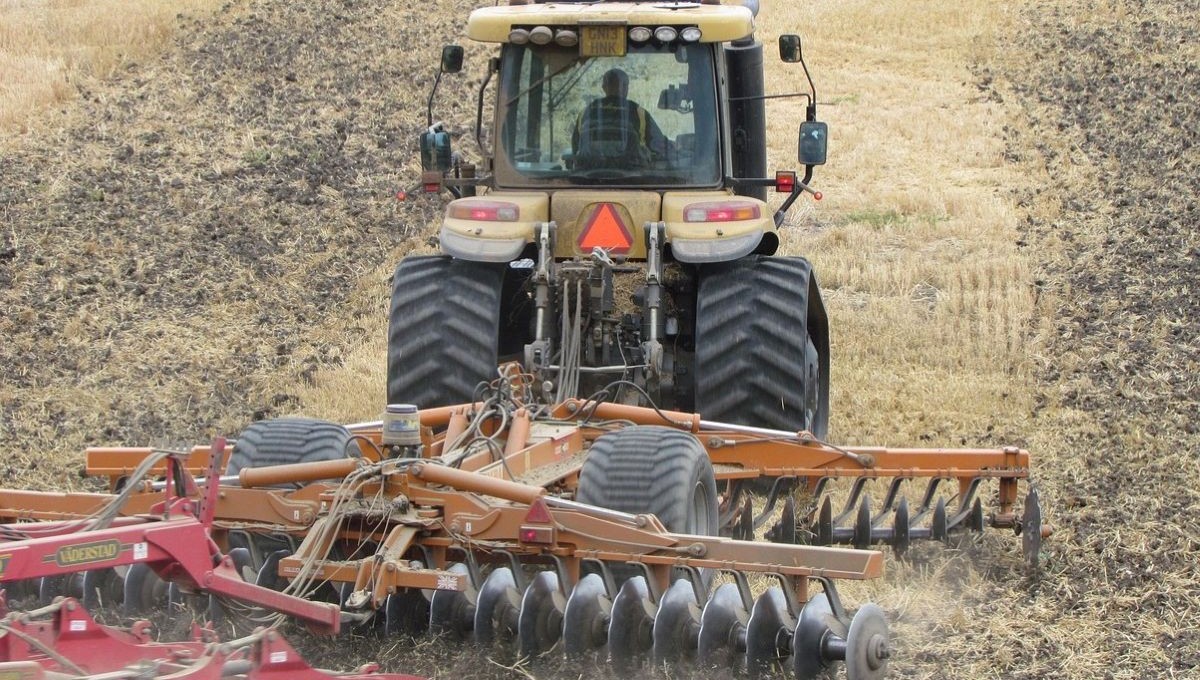
A rotavator is a tractor-mounted agricultural implement fitted with rotating blades or tines. These blades rotate at high speed and dig into the soil, breaking hard clods and mixing crop residue, weeds, and organic matter evenly into the soil.
The rotavator is mainly used for primary and secondary tillage, making it one of the most versatile farming tools available today.
How Does a Rotavator Work?
The rotavator is attached to a tractor’s PTO (Power Take-Off). When the tractor runs, power is transferred to the rotavator shaft, causing the blades to rotate. As the blades move through the soil, they:
- Cut and loosen hard soil
- Mix organic matter
- Level the field surface
This process creates a fine, smooth seedbed that is perfect for planting.
Uses of a Rotavator in Farming
A rotavator is widely used for multiple farming activities:
- Soil Preparation- The main use of a rotavator is soil preparation. It breaks compacted soil and improves aeration, which helps roots grow better.
- Weed Control- A rotavator buries weeds and their roots deep into the soil, reducing weed growth naturally.
- Mixing Crop Residue- After harvesting, a rotavator helps mix crop residue into the soil, improving organic content and soil fertility.
- Seedbed Preparation- A rotavator creates a fine and uniform seedbed, ensuring good seed-to-soil contact and better germination.
- Paddy Field Preparation- In rice farming, a rotavator is commonly used to prepare wet fields and puddle the soil efficiently.
Benefits of Using a Rotavator
Using a rotavator gives farmers multiple practical benefits in daily field operations:
- Saves Time and Labour - A rotavator performs ploughing, harrowing, and soil leveling in one pass.
This reduces manual effort and speeds up land preparation significantly. - Improves Soil Health - A rotavator breaks hard soil and mixes crop residue evenly.
This improves soil aeration, moisture retention, and overall soil structure. - Reduces Fuel Cost - A rotavator needs fewer tractor rounds compared to traditional methods.
Less tractor movement means lower diesel consumption and reduced operating cost. - Increases Crop Yield - Proper seedbed preparation by a rotavator helps roots grow deeper and stronger.
Healthy root development directly supports better plant growth and higher yields. - Suitable for Different Crops - A rotavator works well for wheat, rice, maize, sugarcane, vegetables, and pulses.
Its adjustable blades make the rotavator useful across multiple cropping seasons.
Types of Rotavator
- Tractor-Mounted Rotavator - This type of rotavator is used with tractors and is ideal for medium to large farms.
- Heavy-Duty Rotavator - A heavy-duty rotavator is designed for hard soil and commercial farming operations.
- Mini Rotavator - A mini rotavator is suitable for orchards, gardens, and small landholdings.
Rotavator blade Types
- L-Type Blade- Ideal for soft to medium soils, shallow tillage, and leveling; provides smooth mixing of crop residue.
- C-Type Blade- Designed for hard, compact soils and deep tillage; offers strong cutting power and excellent aeration.
- J-Type Blade- Best for wet, sticky, or sandy soils; durable, self-sharpening, and versatile for weed control.
- Straight Blade- Used mainly for surface weed removal and field leveling.
Why Rotavator is Important in Modern Agriculture
With rising labour costs and the need for faster farming operations, the rotavator has become essential in Indian agriculture. It improves efficiency and helps farmers complete field preparation on time.
Government schemes and custom hiring centres have further increased rotavator usage, making this machine accessible even to small and marginal farmers.
Conclusion
A rotavator is a powerful and versatile farm implement that simplifies soil preparation and boosts farm productivity. It improves soil structure and saves time and fuel, thus offering a long-term benefit to farmers. Whether you are a small farmer or a large landowner, investing in a rotavator can significantly improve your farm.